Most small companies have no CRM margin report by customer, because a CRM does not know margin. It knows revenue. The costs sit in accounting. To find out which customers you actually make money on, you have to bring the two together, and today that usually means two exports, one spreadsheet and a few days of work.
The work nobody wants
Picture the end of a quarter at a thirty-person company. The owner wants to know which customers carry the business and which ones quietly cost it money. The sales director exports revenue by customer from the CRM. The accountant exports supplier invoices, labour assigned to jobs and cost-centre expenses from Pohoda. Then someone, often the owner on a Sunday evening, stitches it together in Excel.
The names never match. The CRM says “Novák Stavby”, Pohoda says “NOVÁK STAVBY s.r.o.”. Some costs have no job attached. A March subcontract turns up in April. The spreadsheet takes two or three days, is roughly right and is out of date a month later. The next one waits until next quarter, so a loss-making customer can stay loss-making for half a year before anyone notices.
Revenue in one system, costs in another, and the truth about margin in a spreadsheet only one person can fix.
— End of quarter, abridged
What connecting CRM and accounting actually means
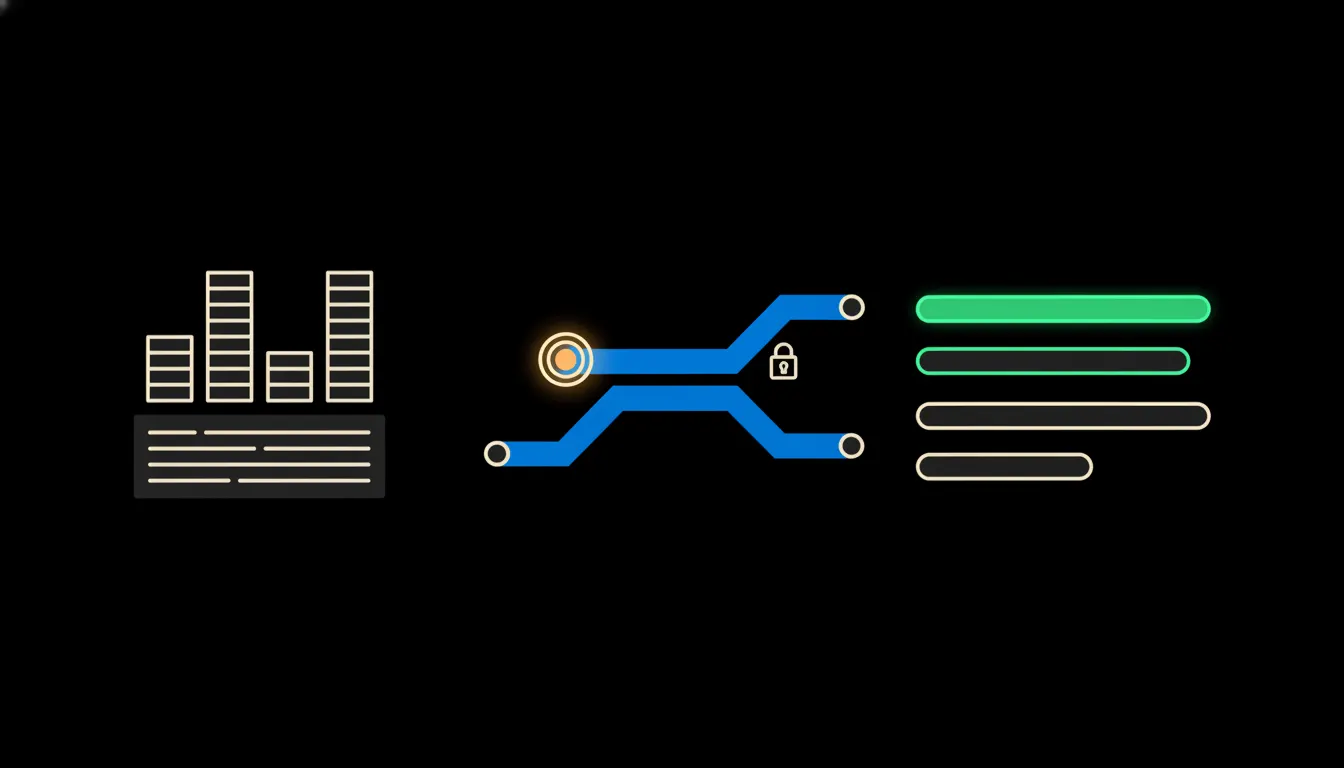
It does not mean a new system or a data warehouse. The CRM stays where it is, and so does Pohoda. We add two small MCP servers between them and Claude. Think of them as two narrow, guarded doors: one into the CRM, one into accounting. Claude walks through only when someone asks a question, and only with that person's permissions.
The matching a person does by hand today relies on what both sides already share: the customer's company ID (the Czech IČO) and job numbers. When asked, Claude reads revenue from the CRM and costs from Pohoda, pairs them and shows the result together with the calculation. Nothing is copied anywhere and nothing is indexed into someone else's cache. The data stays in your systems, on your infrastructure.
Concretely: a CRM and Pohoda, one question
Take a typical Czech setup. Sales keeps customers in a CRM, whether that is Raynet, HubSpot or whatever the team already uses, and the accountant works in Pohoda with jobs and cost centres. Neither system changes. For a company issuing a few hundred invoices a month, that might mean, purely as an illustration, two or three days of manual work every quarter turning into a question you can ask any morning.
- Reads revenue by customer and period from the CRM, including closed deals that are not invoiced yet.
- Finds the supplier invoices, labour costs and subcontracts in Pohoda that belong to that customer's jobs.
- Pairs both sides by IČO and job number, and lists what could not be paired and why.
- Calculates gross margin per customer and ranks customers from most profitable to loss-making.
- On a follow-up question, breaks one customer's margin down job by job.
An illustrative example: a twelve-person IT firm in Brno assumes its biggest customer is also its best. On Monday morning the owner asks: “Rank our customers by gross margin for Q1 and flag anyone under fifteen percent.” The answer shows the biggest customer is eighth on margin, because its jobs carry the most support hours in Pohoda. None of that is new information. It simply lived in two systems that never talked to each other.
What Claude will not do with margin, and why that's good
Claude will not decide how overhead is allocated. Whether you split rent and management by revenue, by hours or not at all is a call for leadership and the accountant. Claude applies the rule, shows it next to the result and does not invent one of its own. It will not change prices, email customers or rebook documents either. The bridge reads. In this setup we do not allow writes to the books.
When data is missing, Claude says so. An invoice with no job, a customer with no IČO in the CRM, a cost booked to the wrong centre: each one shows up on a list of open items rather than as a quiet guess. That is exactly why the result can be trusted. A number you can trace back to its documents can be checked. A number from a spreadsheet only one person can fix, much less so.
What it would take
No year-long project. We start by sitting down with your accountant and your sales lead to agree how revenue and costs are matched and which overhead rule applies. Then we build two MCP servers, one for the CRM and one for Pohoda. They run on your infrastructure and carry the identity of whoever is signed in. You save the report as a skill in your library, so the next day anyone with the right permissions can run it the same way, with the same rules.
What's left
A model that can calculate margin has been around for a while. What it lacked was a view of revenue and costs at once, in the right hands, with the right permissions. Claude is not the bottleneck. The gap between Claude and the data your company already has is the bottleneck. We close that gap.
If you want to know which customers you actually make money on, write to us. A short call is enough to find out which CRM you use, how you run jobs in Pohoda and what connecting the two would take in your company.