AI for accounting does not mean new software. It means asking Pohoda the way you would write an email to a colleague, and getting the answer before you can open a second tab. For companies that already run Pohoda, this is a change without a migration.
The work nobody wants to do
An owner wants to know how much a customer owes. The accountant opens Pohoda, navigates to Customers, filters, exports to Excel, sums it up. Five minutes if nothing interrupts. Twenty if the phone rings.
Pohoda has the data. It always did. The problem is not the software. The problem is that the path to the number runs through several clicks, filters, and exports, repeated for every question, every day.
Pohoda knows the answer. I just do not know how to ask it quickly.
— E-shop owner, June 2025, illustrative scene
What connecting actually means
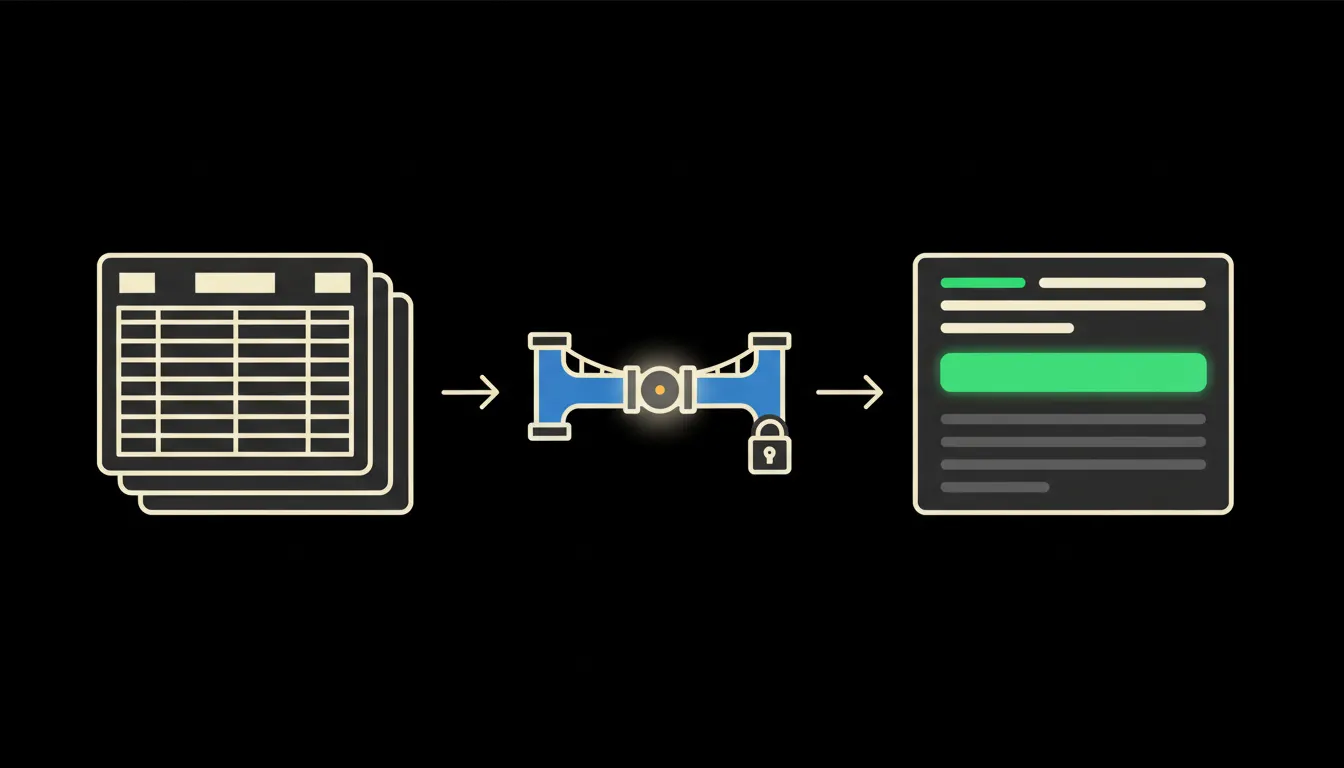
AI stack places a small MCP server between Claude and Pohoda. That server does not know other users' passwords and does not expose data you cannot access. It talks to Pohoda mServer under your login identity, the same way you would log in yourself.
Claude receives a question in Czech. The MCP server translates it into a Pohoda query, returns the result, and Claude formats it as a plain answer. No copy of the data, no export. The data stays in Pohoda, on your server or in STORMWARE's cloud.
Concretely: what Pohoda can answer through MCP
Pohoda holds invoices, receivables, inventory movements, payment orders, asset cards, and payroll. The MCP server surfaces what you have permission to read. The questions that save companies the most time:
- "How much does Novak s.r.o. owe us and when is the oldest unpaid invoice?" -- Pohoda returns the balance and date, Claude answers in a sentence.
- "Which invoices are due this week and how many are there?" -- a receivables view filtered to the current week.
- "What is the stock level for item XYZ and when was it last restocked?" -- inventory card movements without opening the agenda.
- "How much did we invoice to wholesale customers in the last quarter?" -- a summary view without an export.
- "Do we have an expense document for Auto Repair Centre Prague from December?" -- a quick verification without manual searching.
For a small-company owner running Pohoda without a full-time accountant on call, this is the difference between real-time information and information by tomorrow. For an accountant at a larger firm, it means colleagues answer their own routine questions instead of interrupting her.
What AI for accounting will not do, and why that is correct
Claude reads data through the MCP server and answers. It does not post a document, send a payment, or change a customer record. Every action that modifies Pohoda stays with a person. Not only because that is how we configure it, but because that is how it should be.
The accountant decides whether an invoice matches the contract. The owner approves the payment. The audit trail in Pohoda records their signatures, not the signature of an AI. The boundary between reading and writing sits exactly where you want it.
What it would take
If you already run Pohoda, this is not a new software project. The MCP server runs on your infrastructure or in your company cloud. It needs access to Pohoda mServer and the login credentials of the user account you want queries to run under. No year-long project, no data migration.
Where the bottleneck actually is
The model is not the problem. Claude understands Czech, follows context, and can structure an answer from any data. The problem is the gap between Claude and the data your company already holds. Pohoda holds that data. The MCP server closes the gap.
Write to us. A short call is enough to find out whether Pohoda mServer is running in your environment, what permissions would make sense, and how quickly this could go live. No commitment, no lengthy analysis.