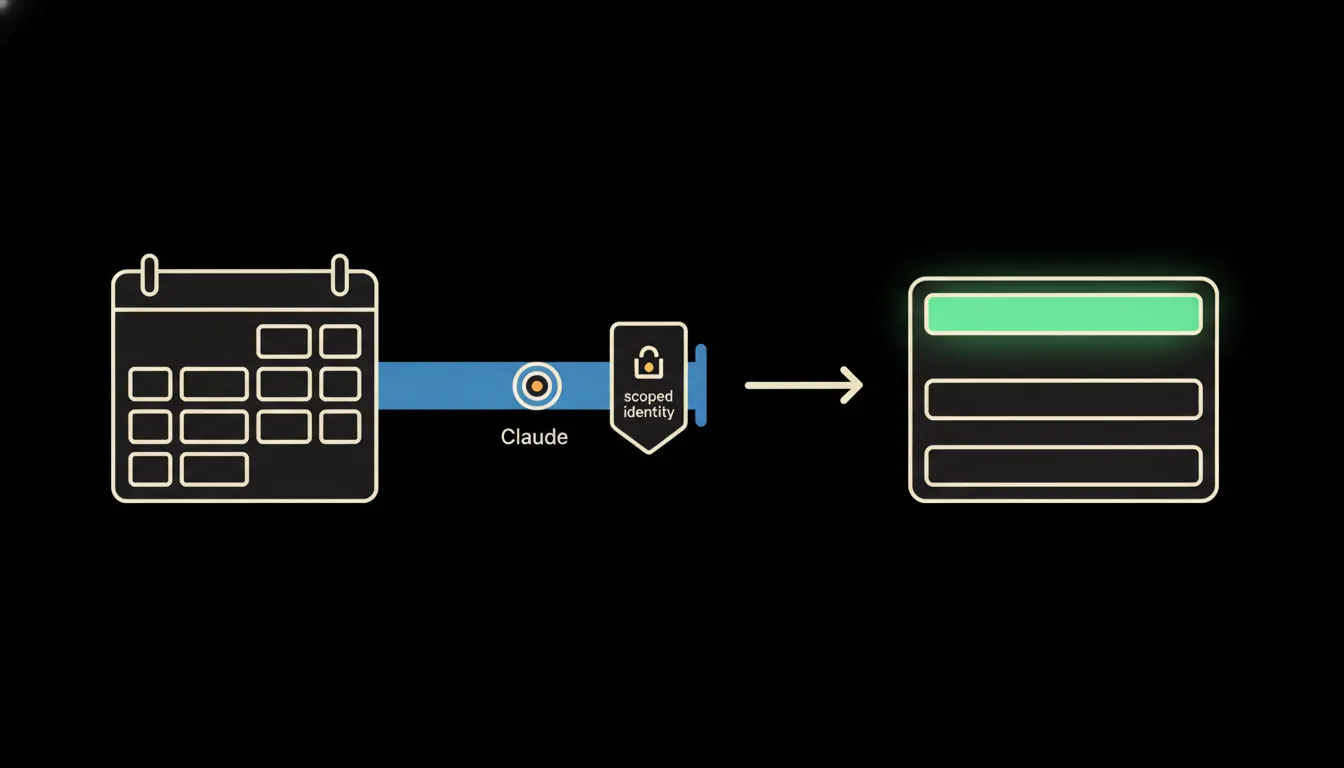
When an apartment manager looks for a way to connect Airbnb data, they rarely want another app. They want reservations, the calendar, cleaning and invoices to stop being four separate windows. They want one answer to the question of how occupancy looked last month and what was left after platform fees, instead of half a Sunday evening spent assembling it.
The work nobody wants to do
A typical month looks like this. One window holds the Airbnb calendar, another the reservations from Booking.com, a third a sheet with cleaning slots and keys, a fourth the bank. Somewhere in between sit the guest records the Czech law on the residence of foreign nationals requires from every accommodation provider, plus the numbers for the local stay fee that each municipality sets in its own decree.
None of it is hard on its own. There is simply a lot of it, and all of it moves by eye and by copy and paste. The mistake surfaces three weeks later, when the amount in the bank does not match the sheet and nobody remembers whether it was a cancellation, a long-stay discount, or a deposit that was supposed to come back.
Four open windows and one spreadsheet only I can read.
— A month closed out, abridged
What connecting the data actually means
Connecting the data does not mean pouring everything into a new system and starting from zero. It means building a small bridge between Claude and the tools you already run. We call that bridge an MCP server: a narrow service that can read one specific thing, say the reservations for a given month or the invoices issued for one flat, and nothing else.
What matters is whose eyes the data is read through. The bridge carries your identity and your permissions. A manager responsible for five flats gets five flats. The owner of one of them sees their one. Nothing is copied somewhere else and nothing is indexed into an outside cache; the bridge asks your system at the moment you ask, and the answer disappears when the conversation closes.
Concretely: calendar, bank and accounting
Let us be direct about it: as an ordinary host you will not get full open API access from Airbnb. You do get calendar sharing over an iCal link, and you have your own reservation overview, your bank statement and your accounting, whether that is Pohoda, Fakturoid or a sheet on Drive. The bridge is built over what you actually hold, and that is enough, because most questions reach across those four places at once.
- Collects reservations from every calendar you manage and finds both overlaps and gaps between stays.
- Calculates occupancy and average nightly rate per flat and across the whole portfolio.
- Matches incoming payments from the bank statement to stays and flags the ones where the amount does not line up.
- Prepares the basis for the local stay fee: nights, guests, period, split by municipality.
- Assembles the guest register from records you already keep, so a person only has to check it and sign.
Take a manager in Brno with nine flats across three buildings, two of them run for outside owners. Today the monthly overview costs two evenings. With the bridge in place the question is one sentence: April occupancy by flat, revenue after platform fees, and every stay where the payment does not match. The answer arrives in seconds and every number traces back to a specific line. That is an illustrative example rather than a measured case, but the shape of the work is real.
The paperwork around all of this is growing, not shrinking. The EU regulation 2024/1028 on data collection and sharing for short-term rental services applies from 20 May 2026 and introduces registration numbers for units along with regular data transfers to public authorities. The sooner your own numbers are tidy and traceable, the less that costs you.
What connected data will not do, and why that is good
It will not set your prices. It will not decide whether a guest gets the deposit back after a scratch on the table. It will not answer a complaint for you and it will not file anything with an authority. It reads, counts, matches and points out that something does not add up.
That boundary is the reason the bridge can be trusted. A system that changes prices and files reports on its own needs far more supervision than one that prepares the paperwork and shows the source of every figure. Control stays where the responsibility sits, with the person who signs.
What it would take
You start with one bridge, not a platform. Usually the calendar and reservations, since most questions begin there, and only then the bank and the accounting. A first version is a matter of days, not months. It runs in your environment, under your logins, and when you switch it off no copy of your data is left anywhere else. No migration, no retyping of spreadsheets, nothing that stops your operation for a quarter.
What is left
The model is not the bottleneck. The bottleneck is the gap between the model and the data you already keep in the calendar, in the bank and in the accounting. That gap is what we close. When you search for a way to connect Airbnb data, this is what you are really asking for, even if it does not sound like it.
If you manage flats and recognise your own Sunday evenings in this, write to us. A short call is enough to work out which bridge is worth building first, what we need for it, and how much work it really is.