CRM reports on delivery deadlines usually show only what sales promised. They do not tell you whether the warehouse and the shop floor can keep that promise. The company finds out about the gap from the customer, who calls to ask where the order is.
The work nobody wants
Every Monday someone in operations exports open orders from the CRM into a spreadsheet. Then they walk around. Warehouse: is that item on the shelf? Production: is the line free on Thursday? Purchasing: did the supplier confirm the material? The answers get typed into a column next to the promised date, and the cells get coloured.
By the time the sheet is finished it is Wednesday, and half of it is out of date. A report exists, but it is late and second-hand. A delay that was visible on Tuesday surfaces on Friday, on the phone, in an unhappy voice.
We promised the date in March. Only purchasing knew the material would land three weeks late.
— An operations meeting, abridged
What it actually means
Checking deadlines is a procedure your team already knows. It just does it by hand. In the skills library, the operations lead writes it down once: which orders to take, what to compare them with, when something counts as a risk, and what the morning summary should look like. The skill is versioned, so when the rules change, they change for everyone at once.
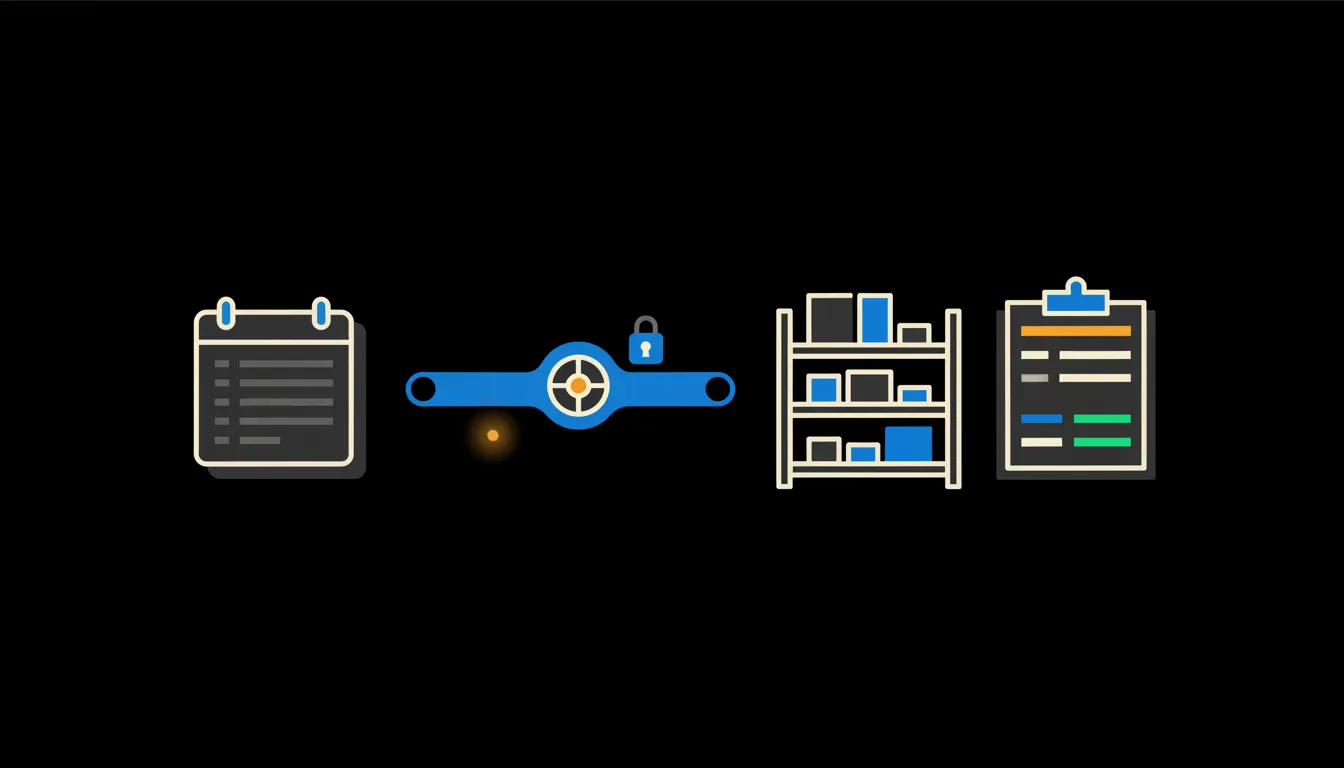
Every morning Claude runs it. It reaches the data through small MCP servers: one for the CRM, one for stock, one for the production plan. Each one can only read what the skill needs, and each carries the identity of the person the report is for. Nothing is copied anywhere. Claude looks at the source, compares, and writes up the result.
Concretely: the CRM, Pohoda and a production sheet
A typical Czech setup: orders and promised dates in a CRM (Raynet or Pipedrive, say), stock in Pohoda, the production plan in a shared Google Drive sheet, and supplier confirmations in the purchasing inbox. You change none of it. We only add the bridge. For a company with, for example, 150 open orders, that means one summary in the morning instead of a spreadsheet that takes until Wednesday.
- Pulls the orders from the CRM with a promised date in the next three weeks.
- Checks each one in Pohoda: is it in stock, and if not, how much is missing.
- Compares missing items with the production plan and the confirmed material arrival date.
- Where the real date lands after the promised one, flags the order as a risk and says why.
- Sends a short summary to the operations lead, and each salesperson their own part.
Imagine a five-person joinery workshop in Brno, with one salesperson who agrees dates over the phone. On Tuesday morning the report shows that a kitchen for a customer in Blansko is waiting for hinges the supplier has only confirmed for next Wednesday. The salesperson calls the customer first, ten days early, and agrees a new date. It is an illustrative scene, but anyone who runs made-to-order work will recognise it.
What the morning report will not do, and why that is good
The report does not rewrite a date in the CRM, does not email the customer and does not reshuffle the production plan. When two orders wait for the same material, it does not decide which one goes first. Those are commercial decisions with a real cost. They belong to the people who know the customer.
It does not guess either. It compares two known values: the promised date and what stock, production and the supplier say. If a figure in the source is wrong, the report cannot fix it, but it shows exactly where the number came from. That is why you can trust it.
What it would take
Not a year-long project. We build MCP servers for the systems you already run, on your own infrastructure and with your own identity management. With your operations lead we write the first version of the skill and run it against real orders. After a few weeks of tuning the rules, you publish it to the library, and from the next morning anyone whose permissions allow it can use it.
What is left
Claude can already compare two dates and write a clear sentence about them. The model is not what holds you back. The gap between it and the systems that hold your orders, your stock and your production plan is. We close that gap, with small bridges and shared skills that stay inside your company.
If your deadlines are still guarded by a Monday spreadsheet, write to us. A short call is enough to see which systems the bridge would connect and what your first morning report would look like.