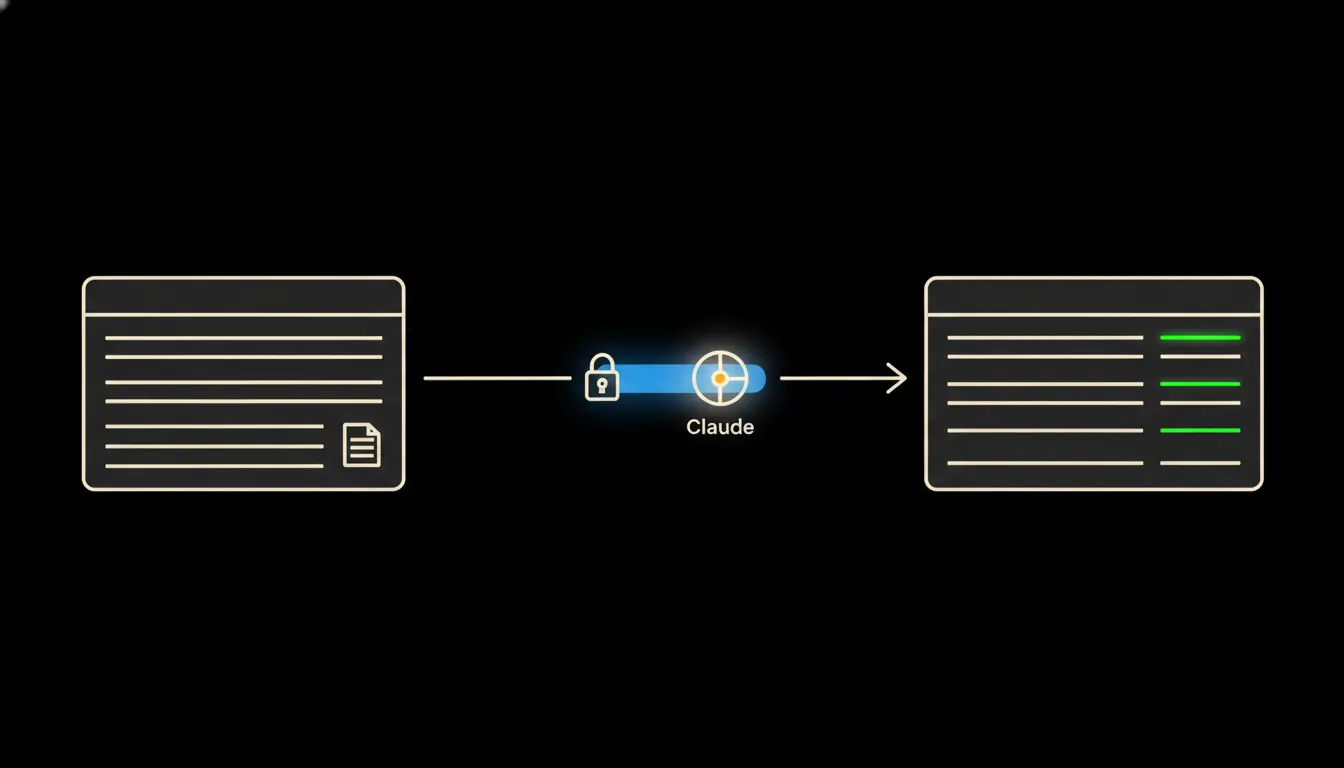
Every Monday morning somewhere in the Czech Republic, Pohoda opens, an export runs into Excel, and a business owner spends thirty minutes assembling a table to learn what they already knew last Friday afternoon. The problem is not Pohoda. The problem is the gap between the data and the answer.
The work nobody wants to do
Pohoda holds everything: issued and received invoices, receivables balances, supplier payables, warehouse snapshots. The data is there. It is just four clicks, two exports, and one pivot table away.
Every question — how much does Novak s.r.o. owe us, what is our collection rate this quarter, how does cash-flow look at month end — demands the same ritual. Log in, find the right report, set the filter, export, open, check. Then repeat because the CEO wants a different breakdown.
Month-end close takes three days. One of them is just copying numbers from one program into another.
— Owner of a manufacturing company, 18 employees — a typical scenario
What it actually means: Claude and Pohoda under one identity
Pohoda has a documented XML interface and REST API. It has existed since 2020 and was extended further in Pohoda 2024. It works with the credentials of a specific user — not some shared service token. The door is there. The right key is missing.
An MCP server is that key. It is a small, focused connector that authenticates into Pohoda under your identity — with your permissions, not an admin account — and makes the data available to Claude. Claude then answers in plain language. No data copy, no export, no table sitting in a third-party cloud.
Concretely: what the bridge does with Pohoda data
Pohoda stays exactly where it is. One MCP server is added — deployed on your infrastructure, not in someone else's cloud. On every query it authenticates with your Pohoda user account, fetches the relevant data through the REST API, and passes it to Claude as context. Claude answers. The whole cycle takes seconds.
- Receivables check: Claude scans issued invoices, flags overdue ones, and sorts by amount and age.
- Period comparison: Claude pulls revenue figures for chosen periods and produces a clean summary — no export needed.
- Payables risk alert: Claude flags suppliers whose payment deadlines are approaching or already past.
- Report preparation: Claude condenses the data into a structured overview ready to paste into a bank or investor brief.
An illustrative example: a one-person s.r.o. turning around ten million CZK a year. The owner asks the same three questions every Friday — cash on account, overdue invoices, biggest outflows of the week. Before the bridge: thirty minutes in Pohoda and Excel. After: three questions to Claude, answers in under a minute.
What the financial bridge will not do — and why that is good
Claude reads data through the MCP server. It does not write. It does not create accounting entries, post invoices, or approve payments. Every action that changes the state of Pohoda requires your authorisation and your click.
This limit is not technical laziness. It is intentional. Financial data is among the most sensitive a company holds. A bridge that can only read and reply is a bridge that can be trusted. If Claude could book a credit note or approve a supplier payment on its own, it would stop being a tool and become a liability.
What it would take
Pohoda has a REST API. Your company has credentials. The MCP server runs on your infrastructure — nothing leaves for an outside cloud. This is not a year-long implementation project. It is one well-scoped connector and a set of permissions that mirrors what you already have configured in Pohoda.
What is left
The model is not the bottleneck. Pohoda has the data. You have the access. The gap is between what Pohoda knows and how quickly you can reach it. The bridge closes that gap.
Write to us — a short call is enough. We will show you what the bridge looks like on your data, not on a demo example.