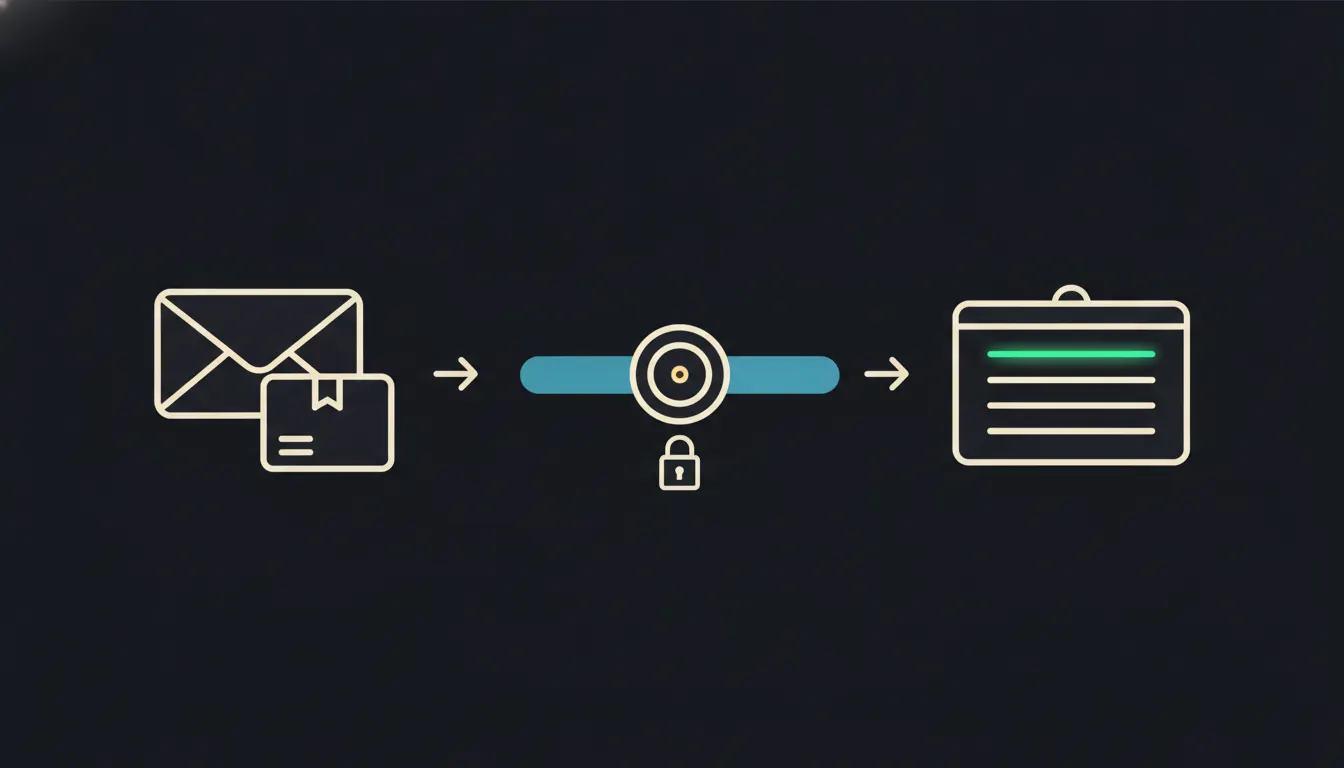
The complaint lands on a Friday afternoon: the product stopped working, the customer wants a refund. Before anyone can reply, they look up the order in the shop, the receipt in the accounting file, the parcel status at the carrier and what a colleague wrote to the same customer last month. An AI assistant for customer support can take that digging off your hands, but only if it can see into the systems where the data actually sits.
The work nobody wants
The decision itself is usually short. Accept, reject, send it to service, swap the unit. The time goes into assembling the picture: the order number from the email, the purchase date, whether the parcel ever arrived, whether this customer has claimed before and what exactly they wrote last time. When the order number is missing, you search by name and address.
Meanwhile the clock runs. Czech consumer law gives the seller thirty days from the moment the complaint is filed to settle it, defect removal included, unless a longer period is agreed with the customer. Thirty days sounds generous. In a small company where the same person handles complaints and packs orders, it turns into a queue kept in someone" + "s head.
Three open windows, one password nobody remembers, and a paper receipt somewhere in a drawer.
— One morning of complaints, abridged
What connected actually means
Claude knows nothing about your order on its own. That is not knowledge it carries around. The difference between an assistant that writes a polite reply and an assistant that prepares a case for decision is one thing: access to your data at the moment you ask.
We build that access as small MCP servers. Each one does a single job: find the order in the shop, pull the receipt from accounting, check the parcel status, read the thread in the support mailbox. The server runs on your infrastructure and carries the login of the person asking. Nothing is copied into a vendor cache, the data stays where it lives.
Concretely: the shop, the receipts and the support inbox
Say a Shoptet shop, accounting in Pohoda, a shared complaints mailbox in Workspace, and a carrier with its own parcel tracking. None of it changes and nothing gets retyped. Each system gains one bridge, and an assistant that can turn all of them into a single case.
- Pulls the order number out of the email, and when it is missing, finds the order by name, address or email.
- Attaches the receipt and the sale date, so it is immediately clear where you stand in the two-year window for reporting a defect.
- Checks whether the goods arrived, when they arrived, and whether this item has been claimed before.
- Writes a five-line summary of the case and drafts the reply in the tone your company uses.
- Files the record with the date the complaint was made, so there is no argument about when the clock started.
A small shop with two people on support could skip the entire lookup on a routine complaint and open a finished overview instead. We will not put a number on it for you, it depends on how many complaints you handle a month. The ratio tends to hold though: searching is most of the time, deciding is the smaller part.
What an AI assistant will not do with a complaint, and why that is good
The assistant does not accept a claim and does not refund money. It does not sign off on a defect assessment and does not settle cases that come down to one word against another. It finds, documents, drafts. The last click belongs to a person.
That boundary is not caution for its own sake, it is the reason the rest can be trusted. Once you know that every payment passed through someone on the team, you can automate everything that comes before it. And because the bridge carries identity, the audit trail shows who looked at what and who approved it.
One skill the team writes once
The expensive part of complaints is not the work, it is the inconsistency. Everyone assembles the reply their own way, a new hire takes a month to learn it, and the exceptions live with whoever has been there longest. Write down the way your company handles a complaint once, as a skill in the library, and the whole team has it the next morning.
The skill is versioned. Change the rule for returns or the wording of a rejection, edit it in one place, and it applies from the next case. Everyone runs it under their own login, so each person sees only what belongs to them. The library grows from there: complaints, returns, exchanges, delivery disputes.
What it would take
No year-long project. You start with one system, usually the one holding the orders, and one type of case. The bridge runs on your cloud, under your identity and your logging. If the case summaries hold up within two weeks, the second system gets added.
What is left
The model is not the bottleneck. Claude can read the email, compare the records and write a decent reply today. The bottleneck is the gap between Claude and the data your company already has: orders, receipts, the history of the conversation. That gap is what we close.
If you want to see what this would look like on your complaints, write to us. A short call is enough. We go through where your data sits and tell you what would be worth bridging first.