Monday morning. The owner is back from the weekend and knows almost nothing about the week ahead. The calendar shows nine hours of meetings, six of which are status calls. Each team tells him what they are doing. He writes it down. On Wednesday he does it again.
The work nobody wants to do
A status meeting is an expensive way to move data. The sales lead knows where the pipeline stands. The project manager knows which tasks are stuck. The accountant knows what is overdue. But this data sits in separate systems and the owner has no direct access to all of it, so he has to ask people. People answer. He takes note. Next week it repeats.
Research consistently shows that managers spend more than half their working week in meetings, with status updates making up a large share. The problem is not the people who report. The problem is that the data is not accessible without an intermediary.
"I called the sales rep to find out what was in the CRM. I could have looked myself if I knew how to read it together with the project board and the invoices."
— Owner of a manufacturing company, 18 employees, situation illustrative
What "connected data" actually means
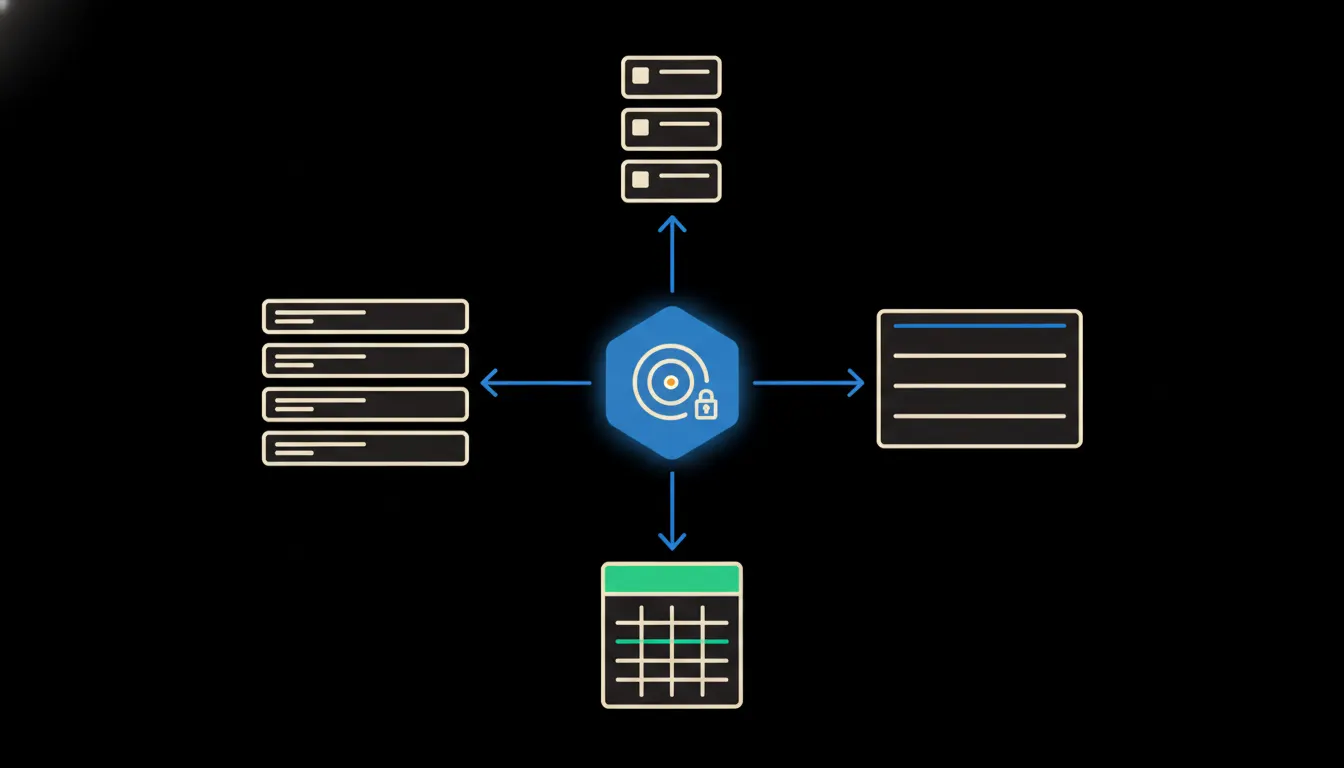
AI stack builds MCP servers: small, focused bridges between Claude and the systems a company already runs. Each server carries the identity of the person asking. Claude sees exactly what the manager would see if he opened Pohoda, Freelo and Raynet simultaneously and could read them as one. No data copy, no central warehouse, no new system to roll out.
The result is not a dashboard. A dashboard has to be opened, understood and interpreted. The result is an answer to a question. The manager writes: "What did not get done last week and where is it affecting cash flow?" Claude reads the tasks, invoices and pipeline and responds with specifics. The meeting is no longer needed.
Concretely: Freelo, Raynet and Pohoda
A typical Czech company with ten to thirty people keeps projects in Freelo or Asana, sales opportunities in Raynet or Pipedrive, and invoices in Pohoda or Fakturoid. Three systems, three logins, three different logics. An MCP server for each adds a bridge. Freelo stays Freelo, Pohoda stays Pohoda. The bridge is added alongside, not instead.
- Claude asks Freelo: which tasks are overdue and who owns them.
- Claude asks Raynet: which opportunities have been waiting for a response for more than ten days.
- Claude asks Pohoda: which invoices are past due and by how many days.
- Claude assembles a summary: three paragraphs, specific numbers, specific project names.
- The manager gets an answer in thirty seconds. The meeting was not needed.
The owner of an e-shop with eighteen employees could write one message every Monday morning and receive an overview of warehouse status (from the e-shop system), open orders (from the CRM) and unpaid invoices (from Pohoda). An illustrative estimate: what now takes an hour of meeting and thirty minutes of notes would take five minutes of reading.
What AI reporting will not do, and why that is a good thing
Claude does not know whether project X should take priority over project Y. It does not know whether the customer who has not paid is a key partner or a forgetful payer. It does not know whether the salesperson with a stuck pipeline needs help or space. These decisions require context that is not in the data.
That is by design, not a limitation. The summary is meant to inform, not to manage. The manager receives a precise picture of the situation and then decides. Accountability does not transfer to the system. Only the routine gathering of information transfers, the part that used to cost human hours.
What it would take
Three MCP servers: one for the project tool, one for the CRM, one for accounting. Each carries the permissions of the manager, runs on the company infrastructure, not ours. No data leaves the company environment. An audit log records every query. One afternoon to set up, then it runs daily.
What's left
The model is not the bottleneck. Claude can read and summarise data from Freelo, Raynet and Pohoda in a single answer. The bottleneck is that this data is not available to Claude. The meeting is an expensive workaround for missing infrastructure.
Write to us. A short call, we go through which systems the company uses and what would make sense to connect first.