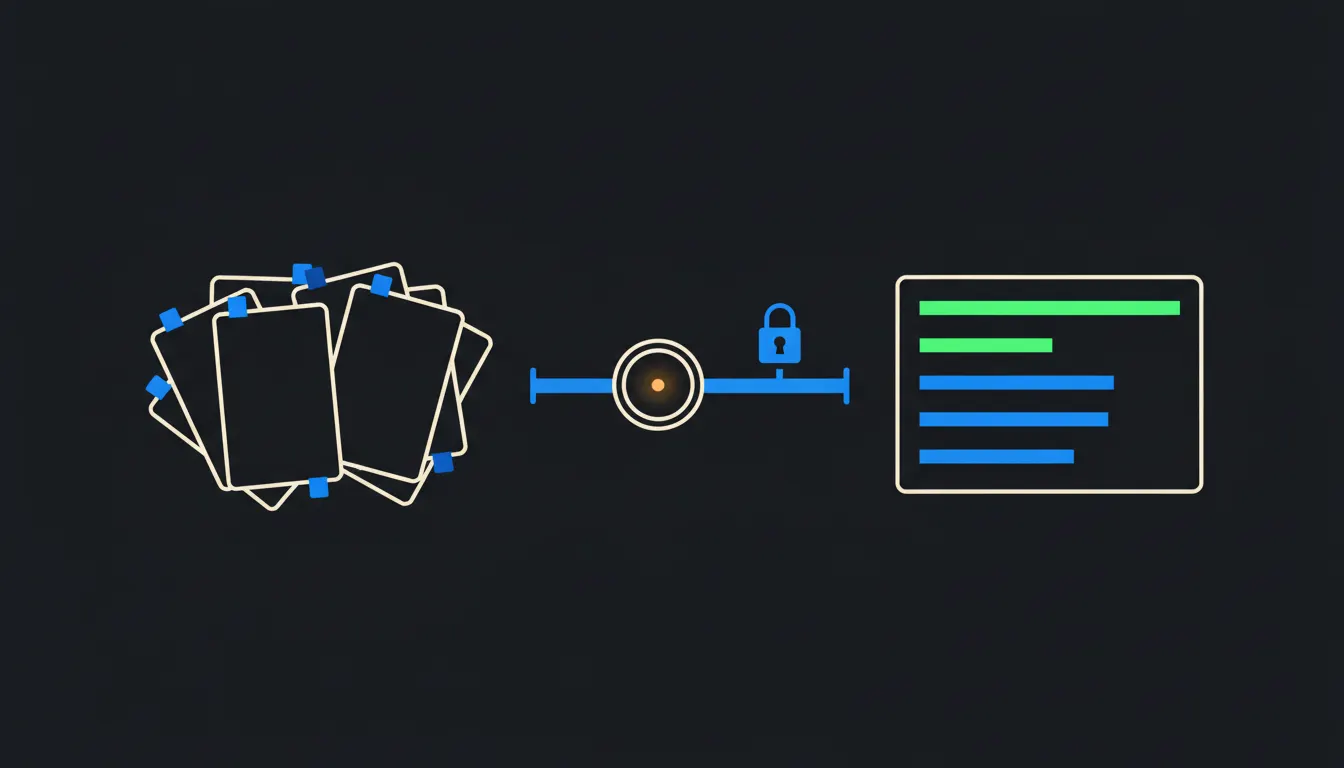
A CRM report on open quotes has one job: tell you which sent quotes are still waiting for an answer and which ones to chase first. Most companies already have that answer in their CRM. It is just scattered across dozens of records, filters and notes. Here is how to have it on one screen every Monday morning.
The work nobody wants
A quote goes out on Tuesday. The customer replies that they will take a look. Then another enquiry arrives, another quote, a meeting, a holiday. Three weeks later the first quote is still marked open in the CRM, and nobody has noticed, because it sits below forty others.
The manual report looks the same everywhere. On Monday morning someone opens the CRM, filters for “sent”, exports a spreadsheet, sorts it by amount, then by date, and checks every row for the last contact. It takes an hour, sometimes two. Because nobody enjoys it, it happens irregularly, and the first quotes to slip are the ones that could still have been saved.
Quote for CZK 380,000, sent twenty-two days ago. Last activity: “I will send our feedback by the end of the week.” From the customer.
— A row from the Monday export that nobody read to the end
What a connected report actually means
On its own, Claude knows nothing about your quotes. The model is not what is missing, though. What is missing is a path between Claude and your CRM. We build that path as a small MCP server: a narrow bridge that can read quotes, their status, amount, send date and last activity. Nothing more.
The bridge carries the identity of whoever is asking. When a salesperson runs the report, Claude looks into the CRM with their eyes and sees only their quotes. When the sales manager runs it, they see their team. Nothing is copied or stored in someone else's cache. The platform runs on your cloud, and every run leaves an entry in the audit trail.
The report becomes a shared routine
This is where it differs from a clever question someone types into a chat once. A good report has rules. What still counts as an open quote. After how many days a quote is old. How to weigh value against age. What to do when the customer replied but has not decided. You write these rules down once as a skill and publish it to the shared library.
The skill is versioned. When the sales manager moves the threshold from fourteen days to ten, the change applies to everyone from the next Monday. Each salesperson runs the skill themselves, with their own permissions, and gets a review built the same way. No private spreadsheets, no “I calculate it differently”.
Concretely: Raynet, Pipedrive or Pohoda
Your CRM stays where it is. Whether you track quotes in Raynet, Pipedrive, HubSpot or as issued quotes in Pohoda, the bridge simply connects to it. For a small sales team with a few dozen open quotes, this usually means one MCP server and one skill (an illustrative estimate, it depends on how your CRM is set up).
- Reads quotes marked sent or awaiting reply, and only those the person running it can access.
- Looks up the last activity on each one: email, call, meeting, note.
- Ranks them by value and age and flags the ones past the agreed threshold.
- For the most important ones, writes a single line on why to call now, citing the last contact.
- Returns the result as a one-screen review, not another export.
Picture a Brno company that supplies and installs shelving systems, with three salespeople (an illustrative example). Every Monday at eight, each of them runs the skill and within a minute has their ten most important quotes in front of them. The owner runs the same skill and sees the whole team at a glance. Nobody exported anything.
What the report will not do, and why that is good
Claude will not call the customer or send a reminder on its own. It will not decide whether to discount a quote or drop it. It does not know the customer's director is on holiday unless someone wrote that into the CRM. The report is only as good as the data it reads.
That is exactly why you can trust it. It does one narrow thing: it reads, sorts and shows. The relationship with the customer stays with the salesperson. And when a quote is missing from the review, that tells you it is missing from the CRM, which is worth knowing in itself.
What it would take
Not a year-long project. First, a short conversation about how you build the report today and what an open quote means for you. Then we connect your CRM with one MCP server to the platform on your cloud, write the rules down as a skill, and let it run alongside the manual report for a week so you can see it matches.
What is left
Your quotes are already in the CRM. Claude can already read, sort and write. What is missing is the connection between them and a set of rules your team agrees on. Once we build that connection, the Monday report stops being a chore and turns into a call list.
If your CRM holds quotes and you are not sure which of them are still alive, write to us. A short call is enough to see which CRM you run and what a bridge to it would need.