The meeting wraps at three in the afternoon. The customer is excited, and so are you. Then reality arrives: notes in a notebook, price list in another tab, CRM still not updated, proposal nowhere. By the time you pull it together, it is evening, and the customer is already talking to someone else.
The work nobody wants to do
Putting together one sales proposal after a meeting takes an average of one to one and a half hours. The salesperson has to open the CRM, find the contact, review the history, pull up the price list, copy the right line items into the template, rewrite their notes into readable prose, and tailor the whole thing to that specific customer. Each step is small. Together they eat time that could have gone into the next meeting.
HubSpot's State of Sales research consistently shows that salespeople spend only 28 % of their working time actually selling. The rest goes to administration, and proposal prep is one of the biggest culprits. At the same time, the longer a customer waits for a proposal, the more likely they are to sign with someone else first.
He was enthusiastic, but by the time I sent the proposal he told me he had signed elsewhere. It was a Friday afternoon.
— Scene from a sales diary, condensed
What it actually means: Claude, MCP, and your data
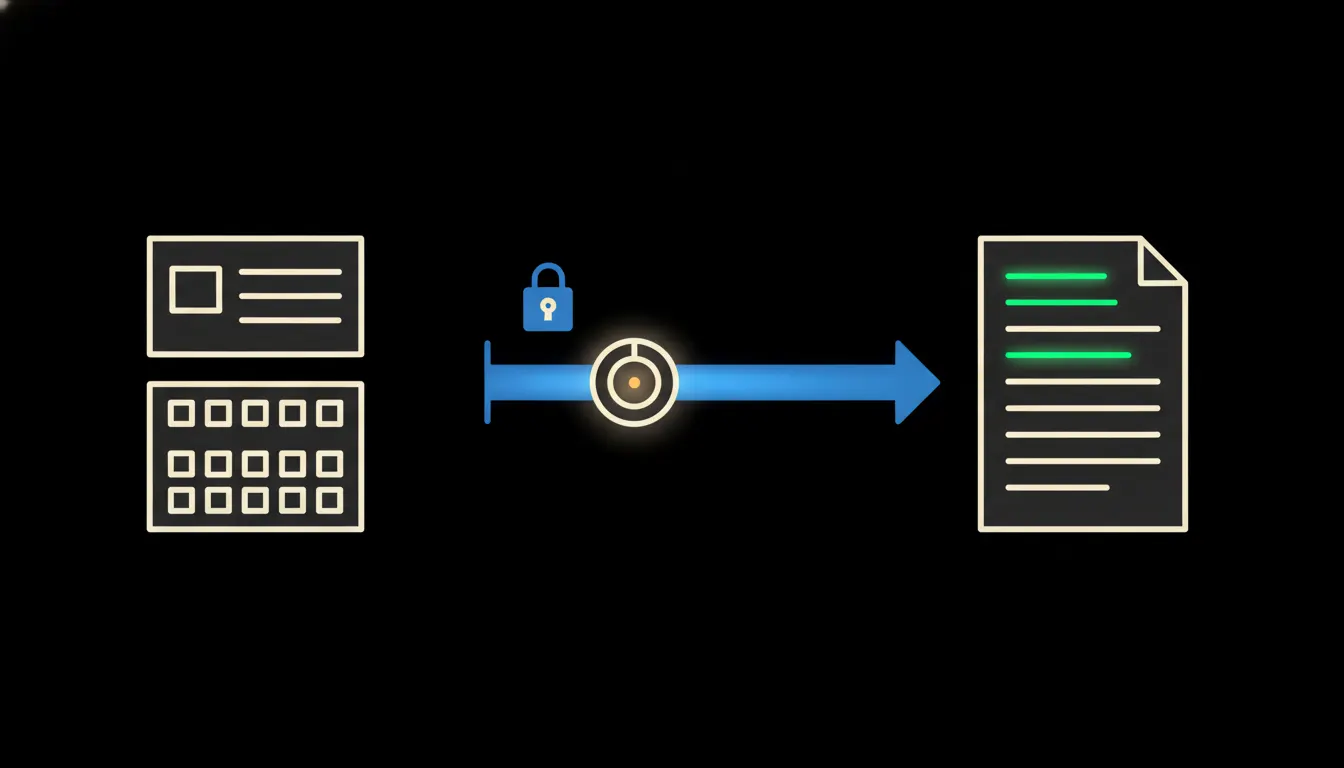
AI stack does not provide a chatbot you paste text into by hand. Instead, we build a small MCP server: a bridge that connects Claude directly to your CRM, your price list, and your proposal template. The bridge operates under your identity: Claude sees exactly the data you would see. No more, no less.
In practice it looks like this: you open Claude, write a few sentences about the meeting, or attach your exported notes. Claude pulls the contact and case history from CRM, checks the current price list from Google Sheets, and builds a personalised draft email. The whole thing takes five minutes. You read it, adjust one paragraph if needed, and hit Send.
Concretely: Raynet CRM and a price list in Google Sheets
Raynet is one of the most widely used CRM systems in the Czech market. Most smaller B2B companies track contacts, communication history, and deal status there. Alongside it, nearly every sales team keeps a price list in Google Sheets, or in an Excel file updated every few months. These are the data Claude needs to build a proposal. The MCP server reads them directly from the source, always in the current version, with no copying required.
- Pulls the contact and meeting history from CRM by name or last-activity date
- Checks deal status: whether this is a new customer or a return after six months
- Reads the current price list from Google Sheets: the right version, no risk of a stale copy
- Builds a personalised draft based on your notes and the proposal template
- Updates the CRM record with the date and a meeting summary, no extra clicking
Consider a consultant who runs four meetings a week and needs to process a follow-up after each one. Previously that meant four extra hours of admin. With Claude connected, it becomes four reviews and four presses of Send, and each of those proposals ships the same day. This scenario is illustrative, but the logic matches what the companies we work with consistently describe.
What sales Claude will not do and why that is a feature
Claude builds the proposal but does not send it. The email sits in your client as a draft. You read it, and only then do you press Send. This step stays consciously with a person. A sales relationship runs on trust, and the tone of one paragraph can decide whether a customer signs. That is too important to happen without your review.
Claude will also not replace the meeting itself. It cannot read whether a customer hesitated on price, or whether that offhand comment about a competitor was a hint or just small talk. You catch those things, and that is exactly why your final eye on the draft matters. Claude removes mechanical work. Human judgment stays.
What it takes in practice
Connecting Claude to your CRM and price list is not a year-long project. The MCP server for Raynet or Pipedrive is built and deployed on your infrastructure, not ours, not in a shared cloud. No personal subscriptions, no data in outside hands. One audit trail, one configuration, access rights aligned with what each team member is allowed to see.
What's left
The model is not the bottleneck. Claude knows how to write a persuasive email. The bottleneck is the gap between Claude and the data your company already has: contacts in the CRM, figures in the price list, the structure in the template. Once we close that gap, the proposal ships the same day. The customer receives it before they hear from a competitor. And you spend the next fifty minutes preparing for the next meeting, not copying rows out of a spreadsheet.
If you run sales meetings and want to know how quickly a connection could be set up, write to us. A short call, no sales script. We will show you what the bridge could do with the data you already have.