A sales rep using Relatoo CRM already has everything: contacts, communication history, open opportunities, notes from the last meeting. But when they want to do something with that data, they export it, copy it, and manually assemble a brief. Claude sits on the next browser tab and knows nothing about any of it.
The work nobody wants to do
A typical day looks like this: check the pipeline in Relatoo in the morning, then open a chatbot on a separate tab, manually type the customer name, paste in the last meeting note, add context from an email thread. Ten minutes of assembling context that was already in the system.
This is not an edge case. It is the standard. Most Czech SMB companies that use a CRM handle AI integration exactly this way: one case at a time, by hand, with no memory between sessions. Every query starts from zero.
"I have everything in the system, but I always have to start over as if it were not there."
— A sales rep who has Relatoo open all day and a chatbot on the next tab
What "connecting data" actually means
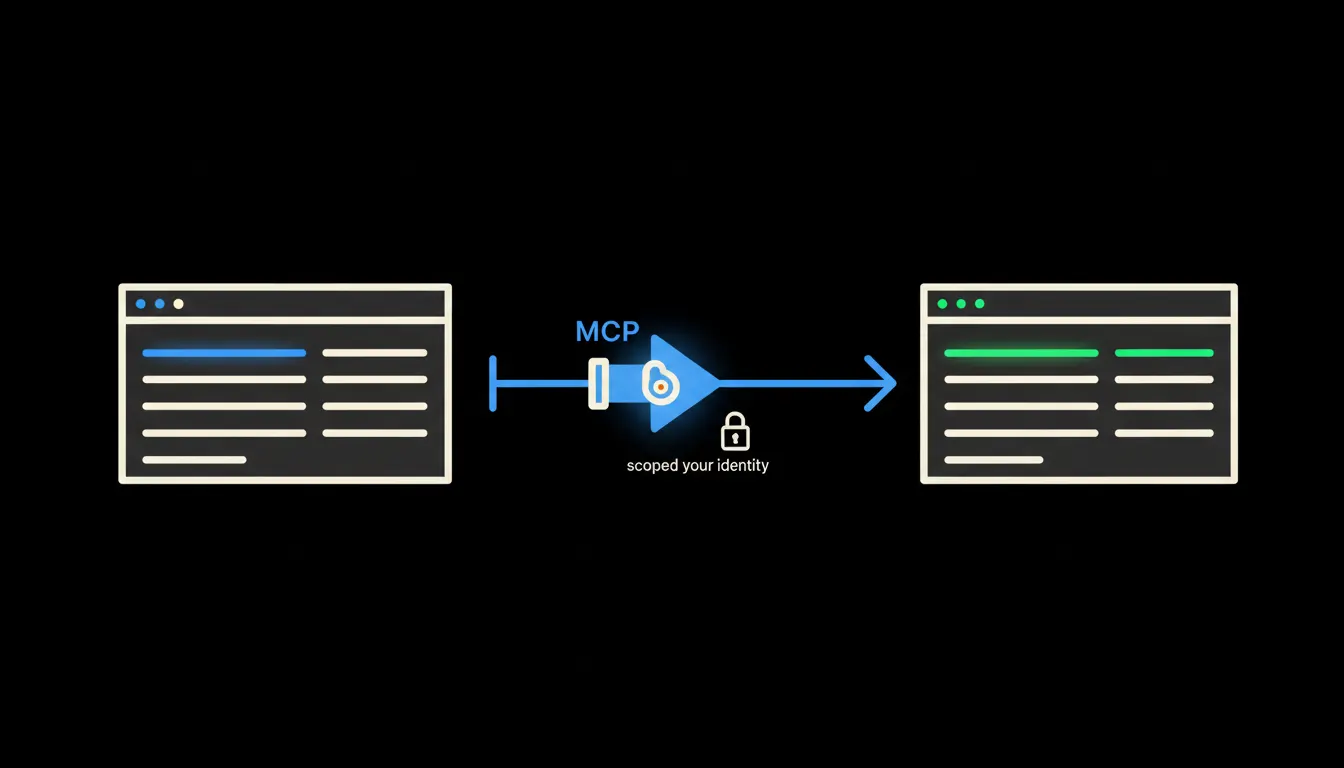
Connecting a CRM to Claude is not a widget or a plugin. It is an MCP server: a small, focused service that checks who is asking with each request, carries that person's access rights into the Relatoo API, and returns to Claude exactly the data that sales rep is permitted to see. Nothing more, nothing less.
The result: Claude knows that Tomas Novak from Alfa s.r.o. is in the pipeline at the "offer sent" stage, the last contact was three weeks ago, and the meeting note says they were discussing integration with their warehouse system. Claude did not need a copy-paste. The sales rep did not need to repeat themselves.
Concretely: what Claude with Relatoo can handle
A company using Relatoo with a populated contact database and activity log can work differently after an MCP server is added. As an illustrative estimate: a sales rep managing a pipeline of 80 opportunities spends around an hour preparing materials for a weekly report. After the connection, that comes down to a few minutes.
- Pre-call brief: Claude reads the last three activities, open opportunities, and meeting notes from Relatoo and produces a short summary before the rep picks up the phone.
- Follow-up email draft: Claude knows what was discussed in the previous meeting and suggests a concrete reply in the context of the current pipeline stage.
- Weekly pipeline review: Claude scans all open opportunities in Relatoo and prepares a structured summary for management without the rep exporting anything.
- Staleness alerts: Claude detects contacts in the pipeline where the last activity is older than 30 days and flags the specific cases for the rep.
For a sales rep handling dozens of active opportunities, this means one thing: the context switching between Relatoo and a chatbot stops existing. Claude is part of the working context, not a parallel tool.
What Claude will not do with CRM data, and why that is a good thing
Claude does not decide on pricing. It does not send an offer on its own. It does not close a deal. It does not access data that the sales rep cannot access. These boundaries are not limitations of the system.
They are the rules that ensure the sales rep carries responsibility for every decision that matters. Claude is an assistant with perfect recall and fast reading. The sales rep is the one who knows why Tomas from Alfa needs another month and why it makes sense to wait.
What it would take
Relatoo has a REST API. The connection is one MCP server installed on the company's own infrastructure, not a year-long implementation project. The server runs under the identity of the specific user, logs stay with the customer, and data does not leave the CRM. No licensing surprises, no additional vendor lock-in.
Where the real bottleneck is
The model is not the problem. Claude can work with customer context, draft a follow-up, pull key information from an activity log. But only when it receives the data. As long as that data is locked inside Relatoo and the sales rep is copying it into a chatbot by hand, no AI is actually helping.
The bottleneck is the gap between Claude and the data the company already has. That is the gap we close. If you use Relatoo and want to know what a connection would look like for your sales team specifically, write to us. A short call is enough to find out.