A CRM report is almost never born in the CRM. It is born in a spreadsheet, on a Friday afternoon, when somebody copies the pipeline out by hand, adds the paid invoices and works out what actually closed this month. The data sat in a system the company pays for the whole time. What is missing is a way to ask it a question in a sentence.
The work nobody wants
The question in the meeting is simple. How much is open for this quarter, what moved since last time, and where is something about to slide into the next period. The answer, though, is assembled by hand. Filter the CRM, export, paste into a sheet, check whether the rep updated the stage, then reconcile all of it against what actually landed in the bank.
It takes two or three hours, and the result starts ageing the moment it is finished. Salesforce, in its State of Sales research, has long described selling itself as the smaller part of a rep’s week, with admin and hunting for data taking the rest. The Monday report is just the visible instalment of that tax.
We have the numbers. Nobody has them in one place before Wednesday.
— A Monday sales meeting, abridged
What asking inside the CRM actually means
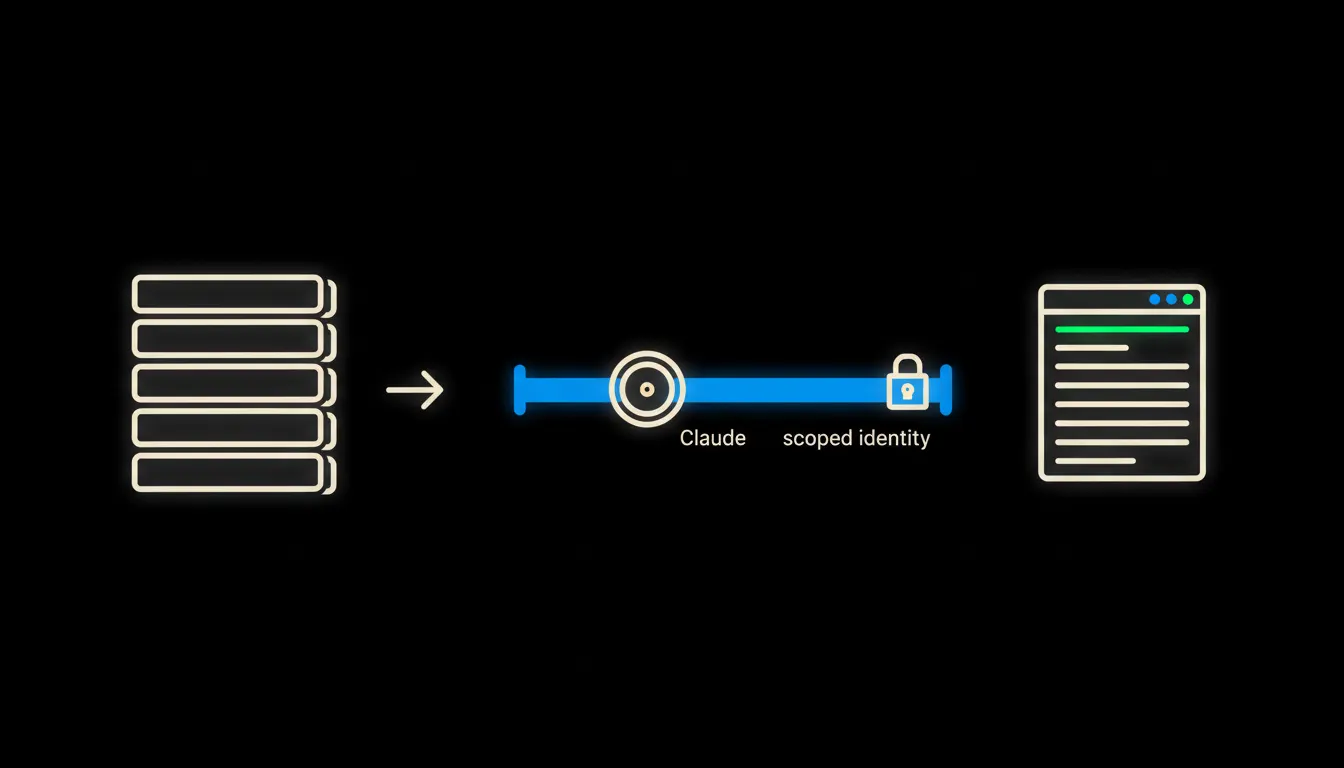
MCP is an open protocol from Anthropic. It describes how a model can reach into a specific system: not into everything, but into a few explicitly named capabilities. A bridge into your CRM is then a small server that can, say, read open opportunities, total them by stage, and return the deals that have not moved in a while. Nothing beyond that.
What matters is who the server asks on behalf of. Not the company, the person at the keyboard. The sales director gets the whole region, a rep gets their own deals, the finance lead gets the totals without contact names if the CRM never granted her those. No copy of the database is created anywhere, no export is uploaded, and Claude does not carry the data off.
Concretely: pipeline in the CRM, invoices in Pohoda
Take a company with twelve people in sales. The CRM lives in Raynet, Pipedrive or HubSpot, it does not matter which, and the books live in Pohoda. An honest sales report needs both: what was promised and what was invoiced. The bridge replaces neither. The CRM stays the CRM, Pohoda stays Pohoda, and one narrow path is added so a question can be asked.
- Reads open opportunities by stage, owner and expected close date.
- Compares the quarter plan against what was actually invoiced this month.
- Pulls the deals that have not moved in two weeks and says whose desk they sit on.
- Shows which records every number came from, so it can be checked in one click.
Illustratively: a sales director could ask on Tuesday morning what has shifted since the last meeting and where the pipeline narrowed, and have the answer before her coffee goes cold. Her rep asks the same question and gets the same shape of answer, only about his own deals. Neither of them opened a spreadsheet.
What an AI report will not do, and why that is good
It will not fix data that was never entered. If a meeting went unlogged and a stage has read the same since February, Claude will describe it exactly as the system holds it. Gartner puts the average annual cost of poor data quality at 12.9 million dollars per organisation, and no bridge pays that bill. It can, however, point at the records that look suspiciously old, which is usually the first step to someone dealing with them.
The bridge also changes nothing by itself. In the first version it reads, it does not write. It will not move a stage, shift a date or message anyone. Whether to give the discount, whether a rep is having a weak month or a weak year, and what gets promised on Thursday: those stay with people. That limit is precisely why the numbers are worth trusting. They have no stake in the answer.
What it would take
You start with one bridge and the three questions that come up in every meeting. Connecting a single CRM is days of work, not a quarter. It runs on your infrastructure, in your tenant, with one audit trail, so it is always visible who asked what. Once that works, invoicing gets added, and the questions that proved useful become saved skills the team has waiting in the morning.
What is left
The model is not the bottleneck. The bottleneck is the distance between Claude and the data your company already has. The report gets assembled on Friday not because nobody can do the arithmetic, but because there is no way to reach the numbers except by hand. That is the gap we close.
Write to us. A short call is enough to work out which three questions your meetings are missing most, and what a first bridge would take.