CRM reports are a time debt every sales manager pays every week. Export the pipeline, clean up the spreadsheet, sort by stage, paste into the director's update. This work adds no value. It can be removed.
The work nobody wants to do
Every Monday morning, the same ritual: log into the CRM, set the filter to the current quarter, export to Excel, delete the columns the director does not care about, add totals, verify the numbers add up, send. Six steps, thirty minutes, zero commercial value.
The problem is not the CRM itself. The data is there. Opportunities, stages, expected values, closing dates. The problem is that someone has to get to it through a sequence of clicks, filters and exports. And that someone is usually the most expensive person in the sales department.
The Q2 pipeline is in the system. Getting it out takes longer than reading it.
— Sales director, B2B technology company, 12-person team
What connecting your CRM to Claude actually means
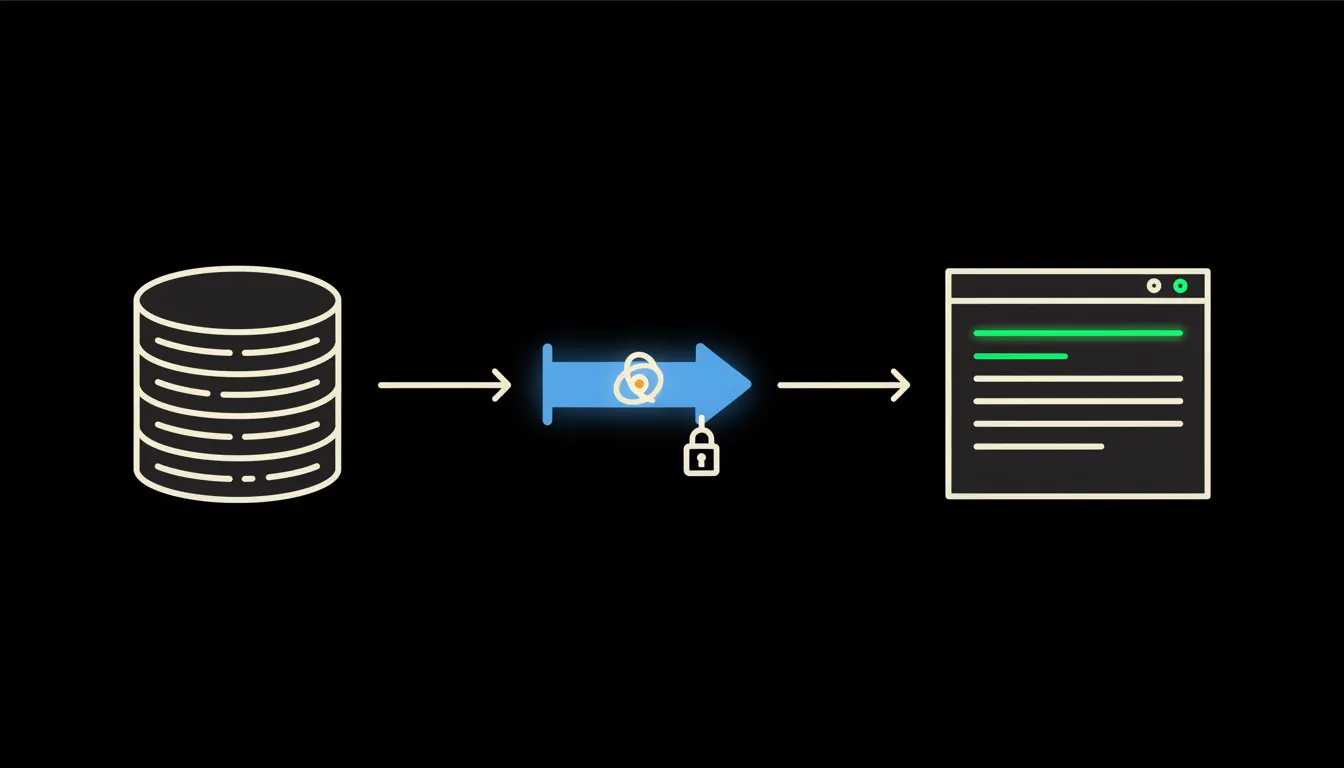
An MCP server is a small, focused bridge between Claude and a specific system. For CRM that means: the server connects to your CRM's API (Raynet, Pipedrive, HubSpot) using the credentials of a specific user. Claude talks to the server; the server talks to the CRM. No copy of the data, no cache on a third-party server.
The key detail: the server uses the identity of whoever is asking. A salesperson sees only their own opportunities through Claude. A manager sees their team's pipeline. A director sees the whole company. Exactly as it is configured in the CRM itself. Claude adds no permissions and removes none.
Concretely: Raynet and Pipedrive in a Czech sales team
Raynet CRM has a REST API that exposes opportunities, contacts, activities and statuses. The MCP server connects to this API with the current user's OAuth token. Pipedrive has a similar API with granular permissions at the pipeline level. Neither system changes. No new integration inside the CRM, no new module. A bridge is added.
- The manager types: "How many opportunities are currently in the proposal stage and what is their total value?" Claude answers in under a second from live data.
- A salesperson asks: "Which contacts have had no activity in the last 14 days?" The server scans the records and returns them by name.
- The director requests: "Compare Q1 and Q2 performance by salesperson." Claude builds the summary from what is actually in the CRM, not from what anyone remembers.
- The weekly report is generated with one message instead of a thirty-minute export.
An illustrative example: a five-person sales team at a Prague SaaS company. The sales director spends part of every Friday afternoon assembling a pipeline overview for the partners. After connecting Pipedrive to Claude via an MCP server, she gets that overview as the answer to a single message. The data is current to the moment of the query, not to the last Friday export.
What AI CRM reporting will not do, and why that is a good thing
Claude does not edit records. It does not move opportunities to a new stage. It does not send proposals. It does not close deals. It answers questions about the data that is there.
This boundary is intentional. A CRM is a record of reality, not an instruction to an AI. Sales decisions, tactics, customer prioritisation: these depend on experience and context that belongs to the person. Claude delivers the overview faster. What the manager does with it stays with the manager.
What it would take
An MCP server for Raynet or Pipedrive is a small project. Connecting to the API, configuring identity-scoped tokens, setting access for specific roles. The entire platform runs on your infrastructure, not on ours or a vendor's cloud. One audit trail, one tenant, your data nowhere else.
What is left
The model is not the bottleneck. Claude can read a pipeline, compare quarters and identify opportunities with no recent activity. What holds it back is the missing bridge between it and the data your company already has in the CRM.
Write to us. A short call is enough to work out whether your CRM and your team would benefit from this kind of connection. No commitment, no year-long implementation.